
The answer to the above is a simple one but read the story first rather than go straight to the end!
Most of the farms around our cottages are dairy and sheep farms. And now I understand a bit more about what goes round – comes round! And the answer to that one is grass (or more precisely, grass turning into silage)
From spring through to autumn cows and sheep graze – i.e. they pretty much feed themselves. But over winter they are brought into the sheds and they need to be provided with food – that’s where silage comes in. And it’s now that time of year when the farmers are mowing those ungrazed fields in which the grass has been left to grow to about 50 centimeters high.
Now it takes me about 30 minutes to cut the lawns around the cottages. They are not big – perhaps a third of an acre all told, maybe a little less, and I must confess that I have bought a sit–on lawnmower so it’s no effort at all and I love it! But I watched in awe the other day as George and his son Eros mowed a whole field in about the same time it takes me to do mine and their toys are much bigger than mine! And then the next day, with help from other farmers (they all help each other), they harvested and clamped the whole lot in about the same time again! The pictures tell the story:
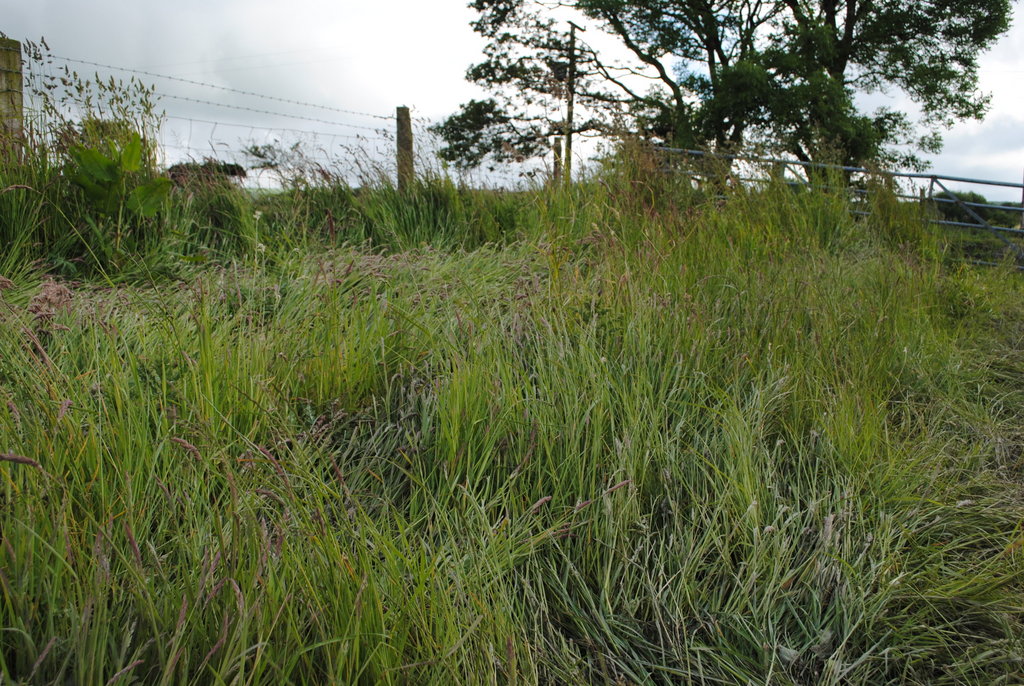
The grass in the field is left to grow (see below): it’s full of nutrition at this time of year and if stored while still a little moist it will ferment, or naturally pickle, before it is needed to feed the livestock. Silage and haylage are very similar but silage is usually preferred by livestock to hay as it has fermented more which makes it more palatable and of higher nutritional value.
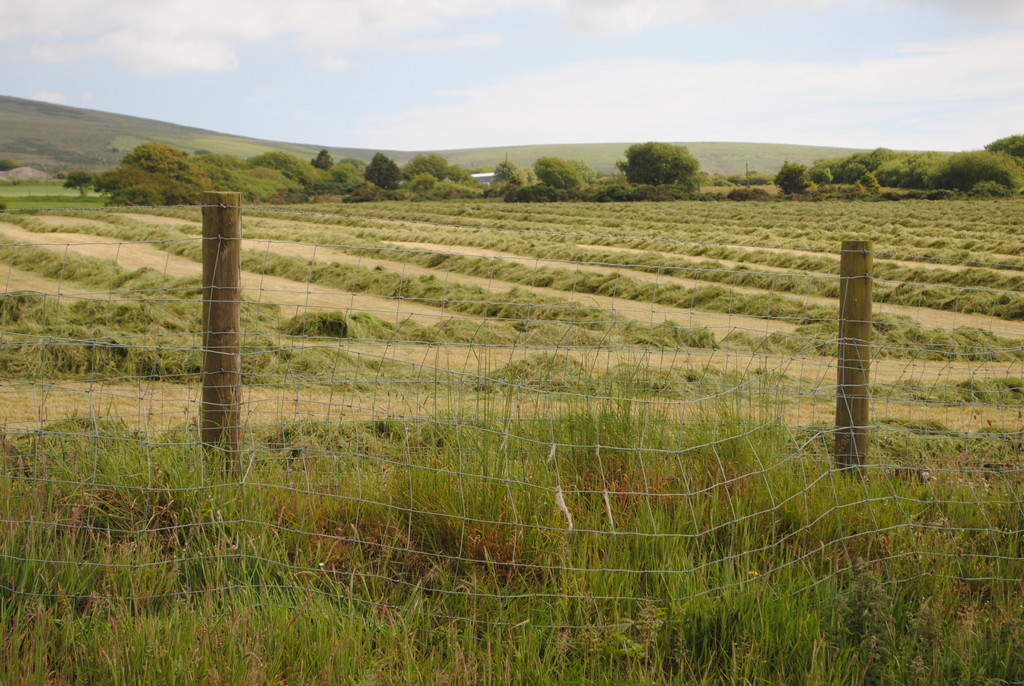
Once cut it is left overnight to partially dry and then it is raked into long furrows ready for collection (see below).
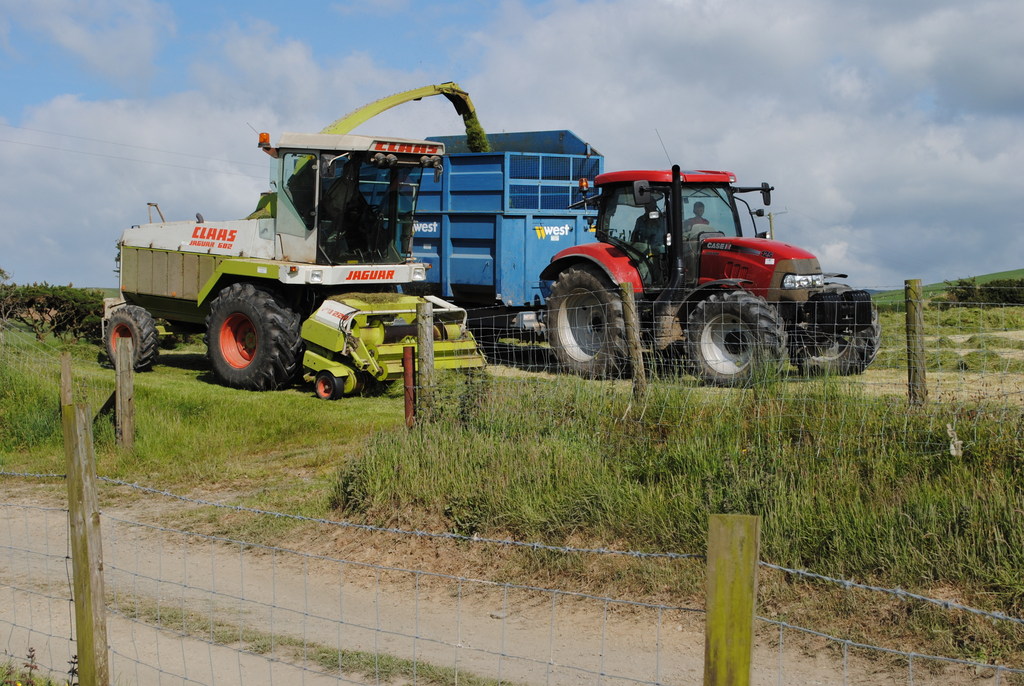
The next day the harvester sweeps up and cuts the grass into shorter lengths and then blows it into a trailer which is pulled by a tractor driven alongside the harvester. These trailers fill pretty quickly and there is usually another tractor and trailer waiting to take over as soon as the first one is full.
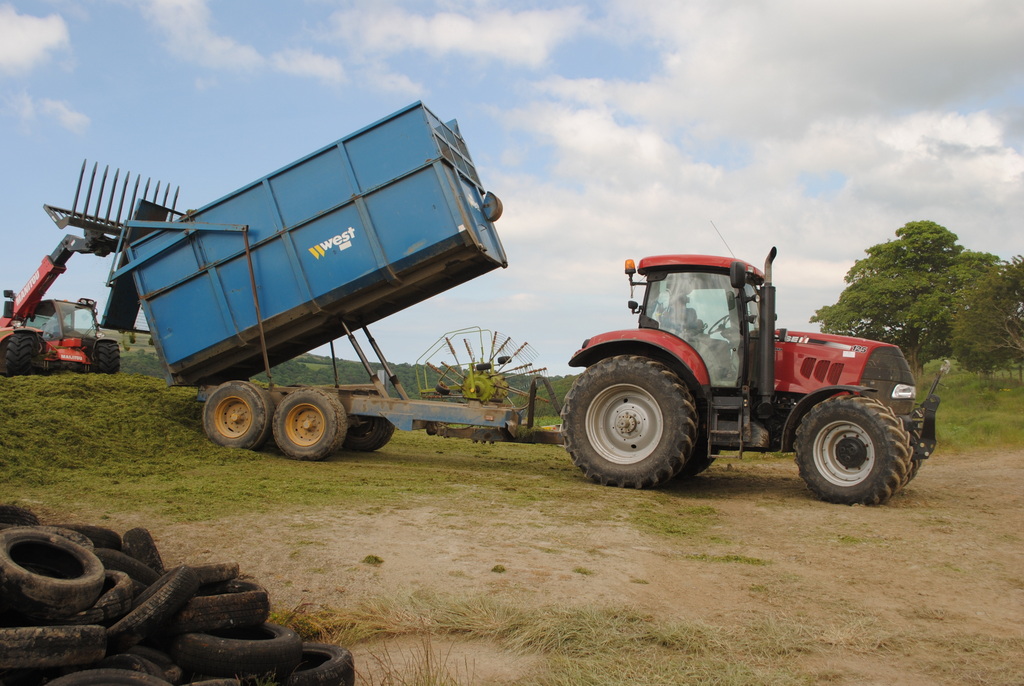
The cut grass is taken to the ‘clamp’ (see below) where it is to be stored. In this case the clamp is almost next to the field being cut so the distances involved are small but we have seen plenty of tractors pulling trailers along roads well into the night: this is a tough time for the farmers. I offered my services on my sit-on lawnmower but they declined! In the clamp the grass is deposited in a heap and pushed up by a handler into a large pile (see below) which is then compressed to remove as much of the air as possible.
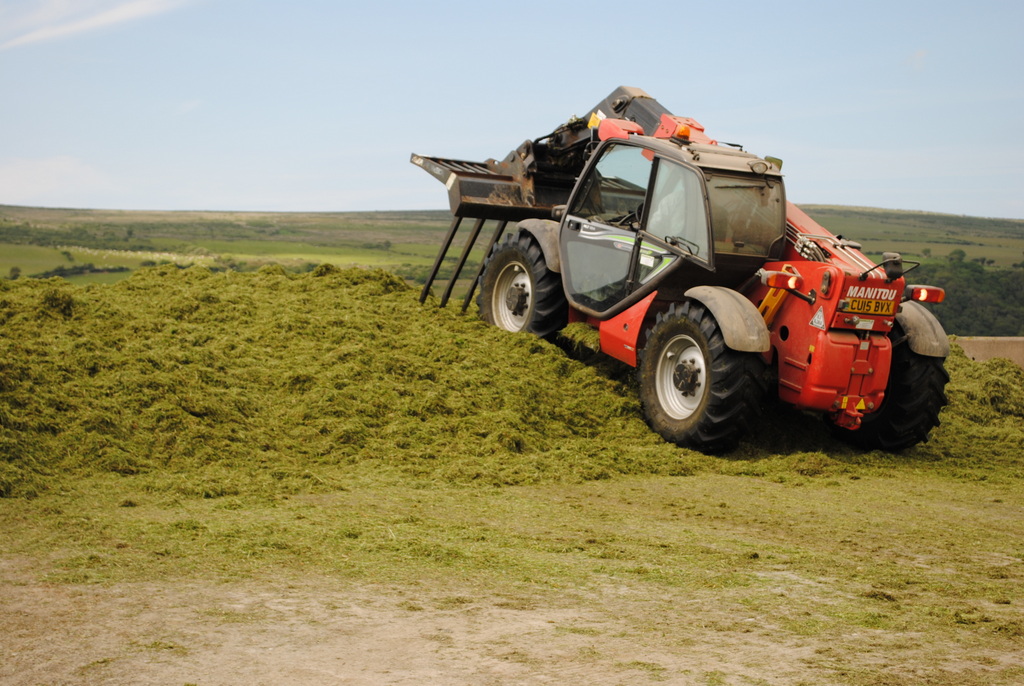
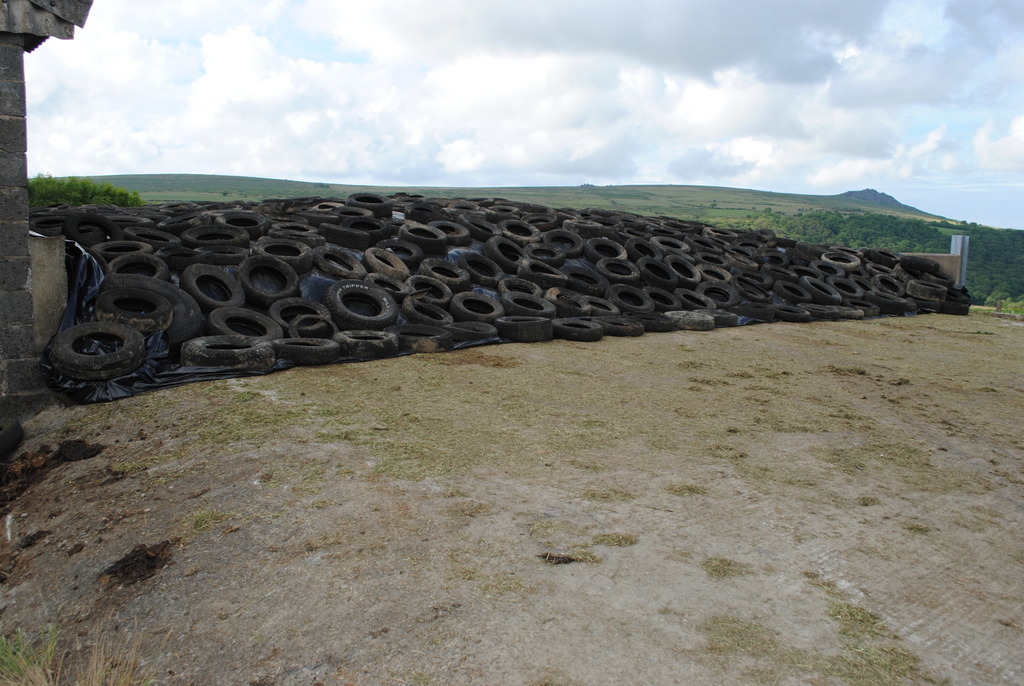
When the grass is sufficiently firm it is sheeted over and tyres are then placed onto the sheeting to keep air out (see below). The fermentation process then naturally begins. If the clamp is not made airtight the resulting silage will be of a poor nutritional quality and will be less palatable.
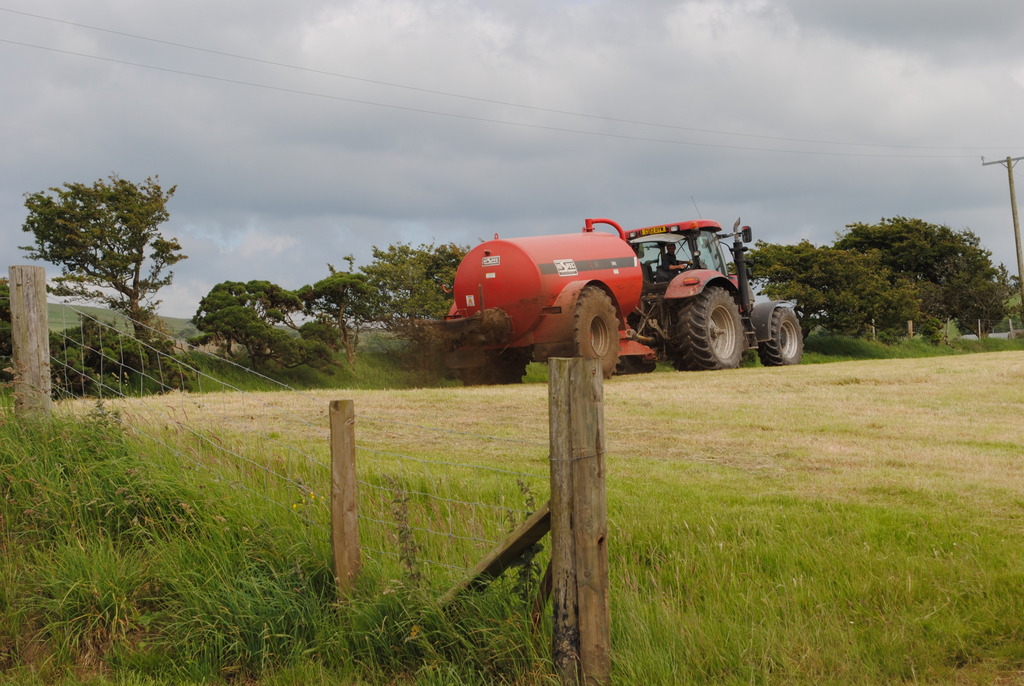
In the days following the cutting and harvesting of the silage the ‘muck-spreading’ starts in order to fertilise the fields and encourage the grass to grow again ready for the second cut of the year sometime in August.
So now you know about silage – and why farms have so many old tyres!!