
Now last time I wrote the blog I promised you a tale about an angry horse and the need to always carry a bag of bits and pieces to undertake repairs. Well I have changed my mind because I have not returned to the scene of the incident yet to photograph the horse in question and you need to see him/her to appreciate the story. So instead here is a serious question. Why do cattle need passports? You never see them at the airport or queuing at Dover with their suitcases and sunglasses!
Well it’s all to do with identification – so actually it is quite similar to why we have passports. In the latter case we always associate passports with flying off on holiday but actually your passport is issued to allow you to move around and for the authorities to know who you are. It’s the same for cattle. All cattle born in or imported into Great Britain since 1 July 1996 must have a cattle passport. This identifies them and their movements and must remain with them throughout their lives. The farmer keeps the passports (obviously you cannot expect the cow to keep it because it does not have pockets!) and must be able to produce them for his herd at any time and it is especially important that he can produce each passport for any cattle that he wants to sell.
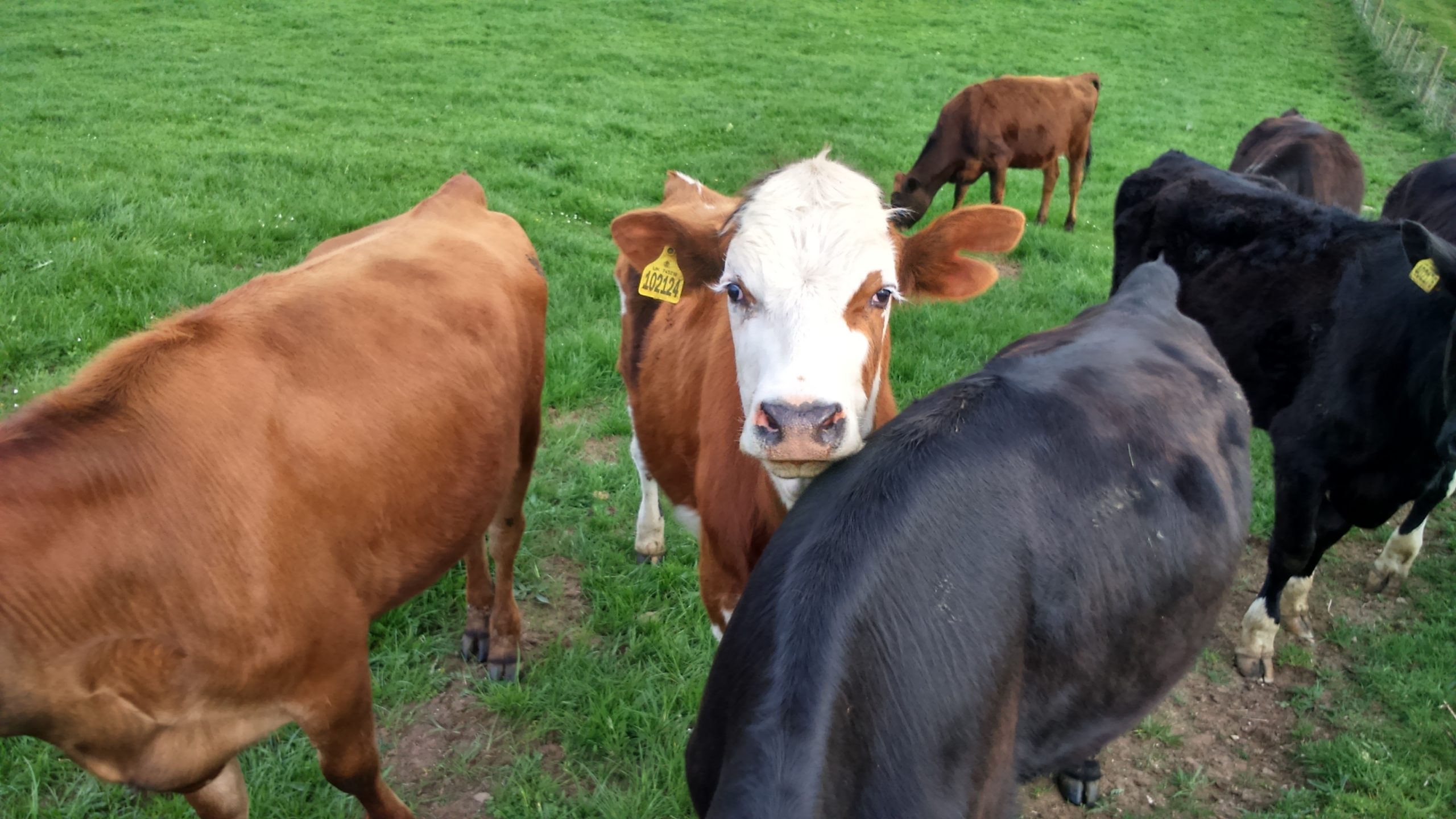

Now that you are an expert on passports how about electronic ear tags (as shown above). The farmer must ensure that all cattle born on or after 1 January 1998 have an official ear tag in each ear (known as ‘double tagging’). The main ear tag, known as the primary ear tag, is made of yellow plastic and contains mandatory information like the herdmark and the individual animal number. The secondary tag can show additional information – like the animal’s name(!) or distinguishing marks to further aid identification. I only know this because I asked my farmer friends about why some cows only had one tag – like the one on the left above – which I photographed earlier this week. Apparently occasionally cattle can stick their heads into awkward places and the tags can be ripped out. Sounds painful but this lot seemed happy with their life.
Enough animal and countryside factoids for today.
A little more about ‘base camp’ – where we live. We live at the end of a compacted farm track – it’s about 500 meters long. Here it is below. It has a beautiful little stream running alongside it and at the moment it also has the most beautiful display of gorse in full bloom right next to it.
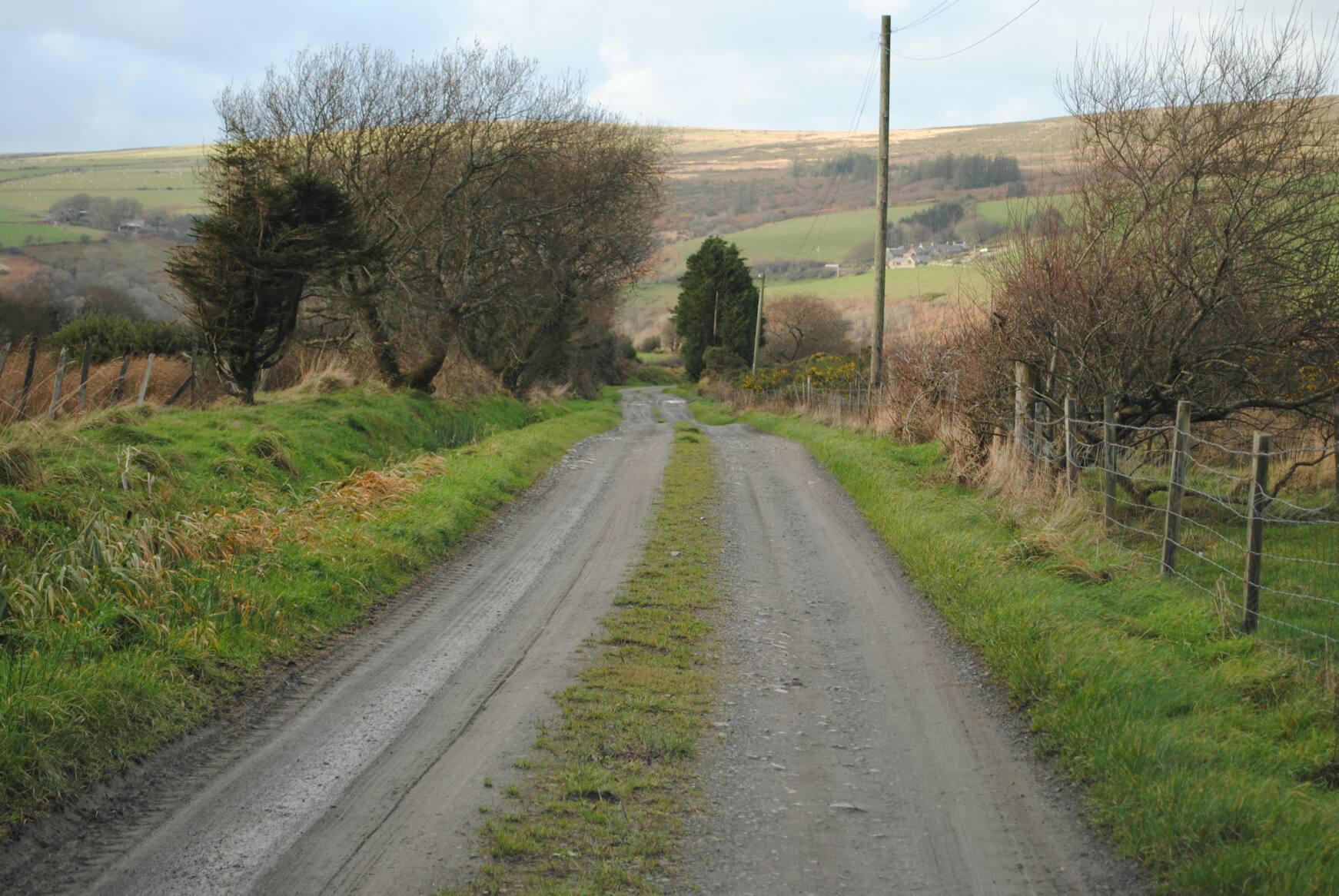
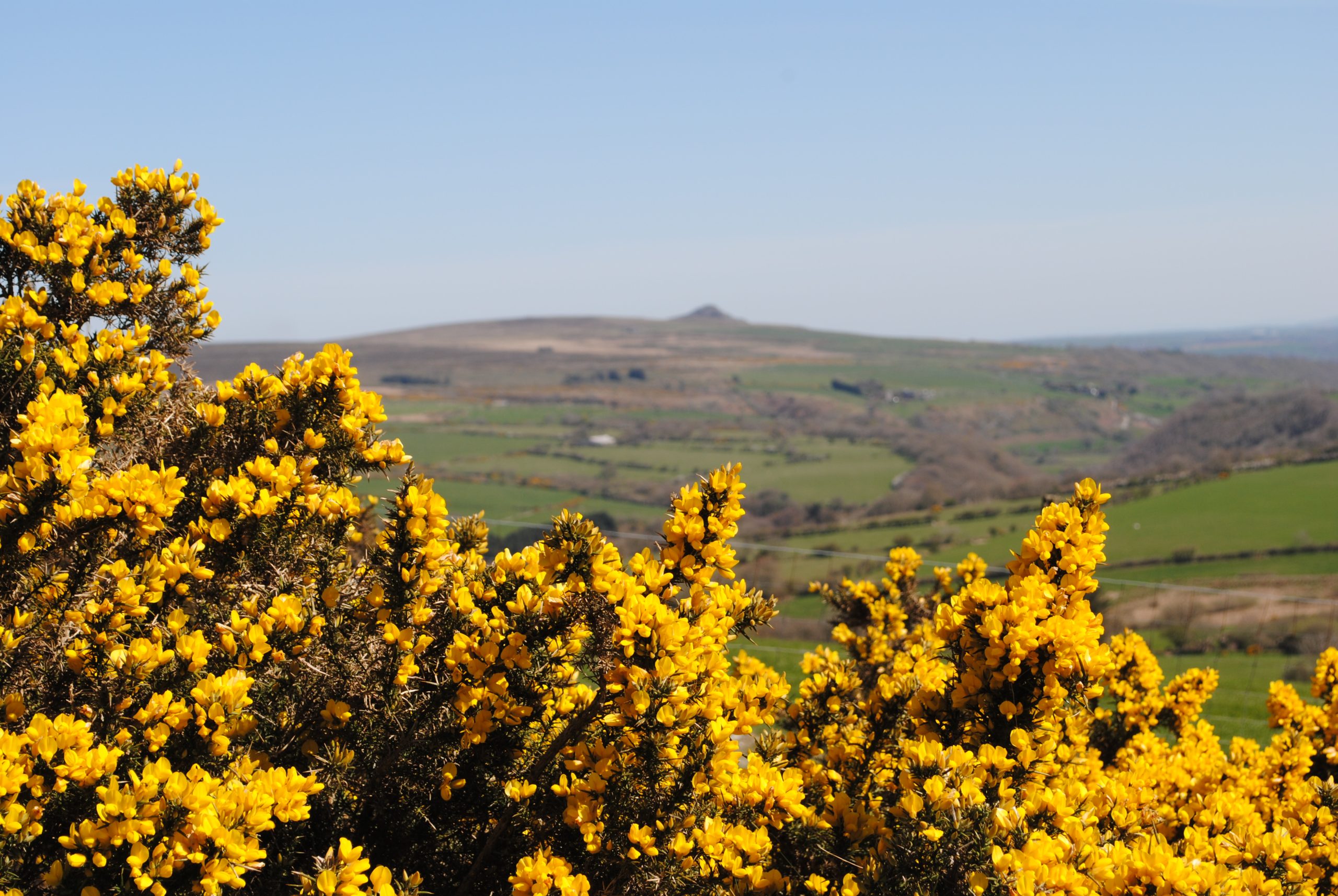 We share the track with our only neighbours and also George uses it to get to his barn and some of his lower fiends. A quick introduction to our neighbours is all part of building the picture: Peter and Jane Heard live immediately next door in what was the original farmhouse. They are wonderful people who have gone out of their way to welcome us and introduce us to the Gwaun Valley. And next to them live Anita (Peter’s daughter) and her husband Ryan and their daughter Cloe. Cloe often helps me in the garden when she gets home from school and tells me what I should be doing – I like Cloe(!). More about all of them another day.
And we live below a couple of big hills or small mountains whichever way you choose to describe them. This one is Carn Ingli (pronounced as it looks) meaning Mountain of Angles (on the left below). And Foel Eryr (pronounced Voil Air-ear) – Eagle Mountain (on the right).
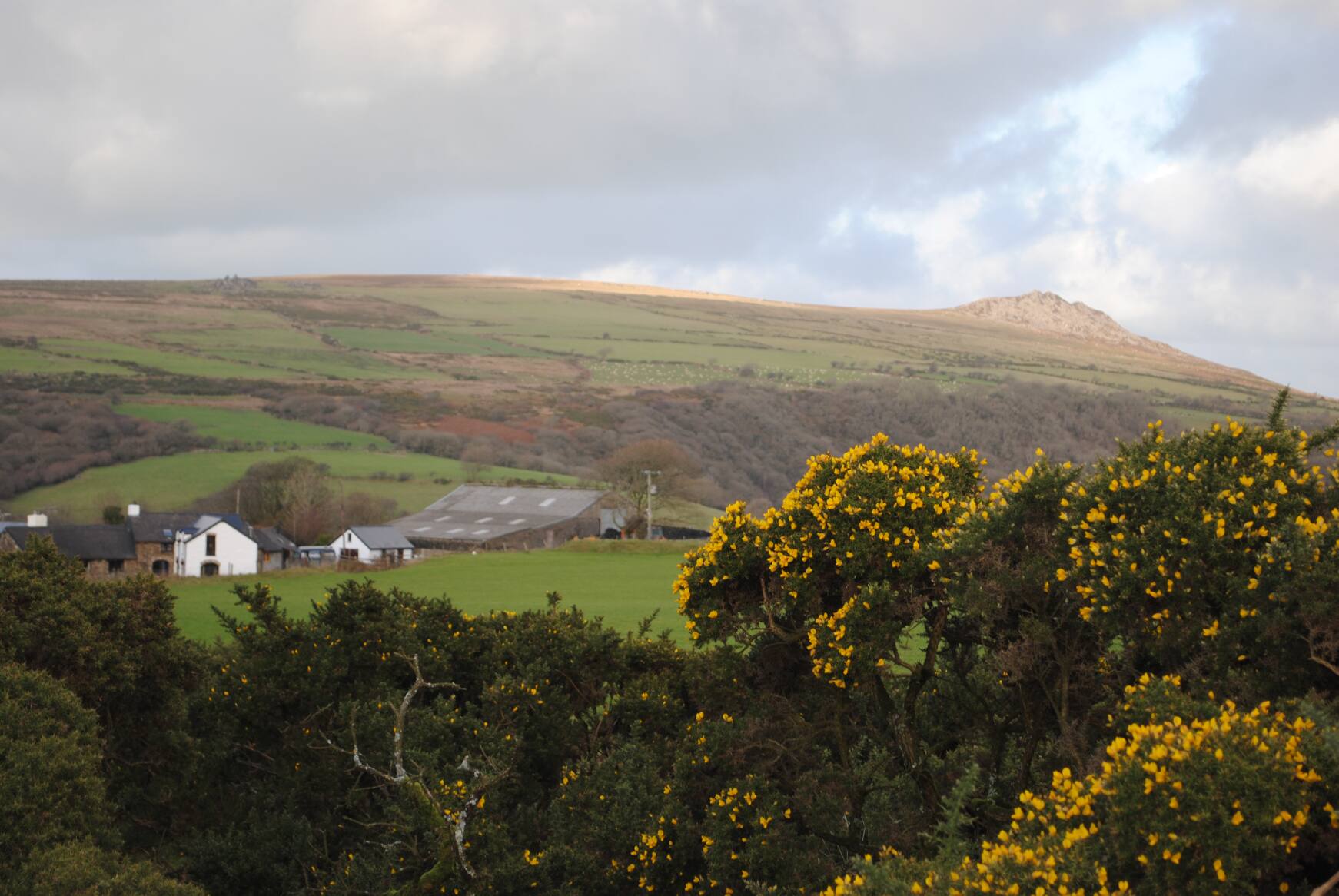
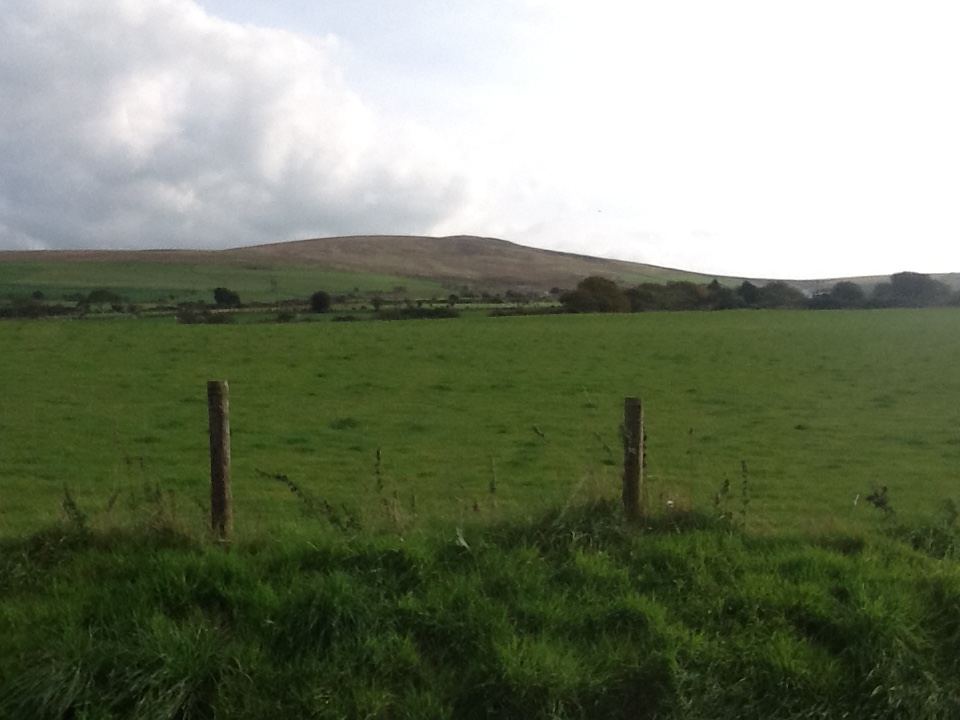
Plenty of stories of both to come later in the journey. We are so lucky to be living the dream.
Will blog soon – when I have that horse picture!