
I have just returned from co-guiding a great band of walkers for three days and I thought it would be useful to draw out a few lessons about kit in order to give inexperienced walkers a few things to think about. And at the end I offer some advice on how to invest in the right kit which will then look after you for many years to come without having to break the bank.
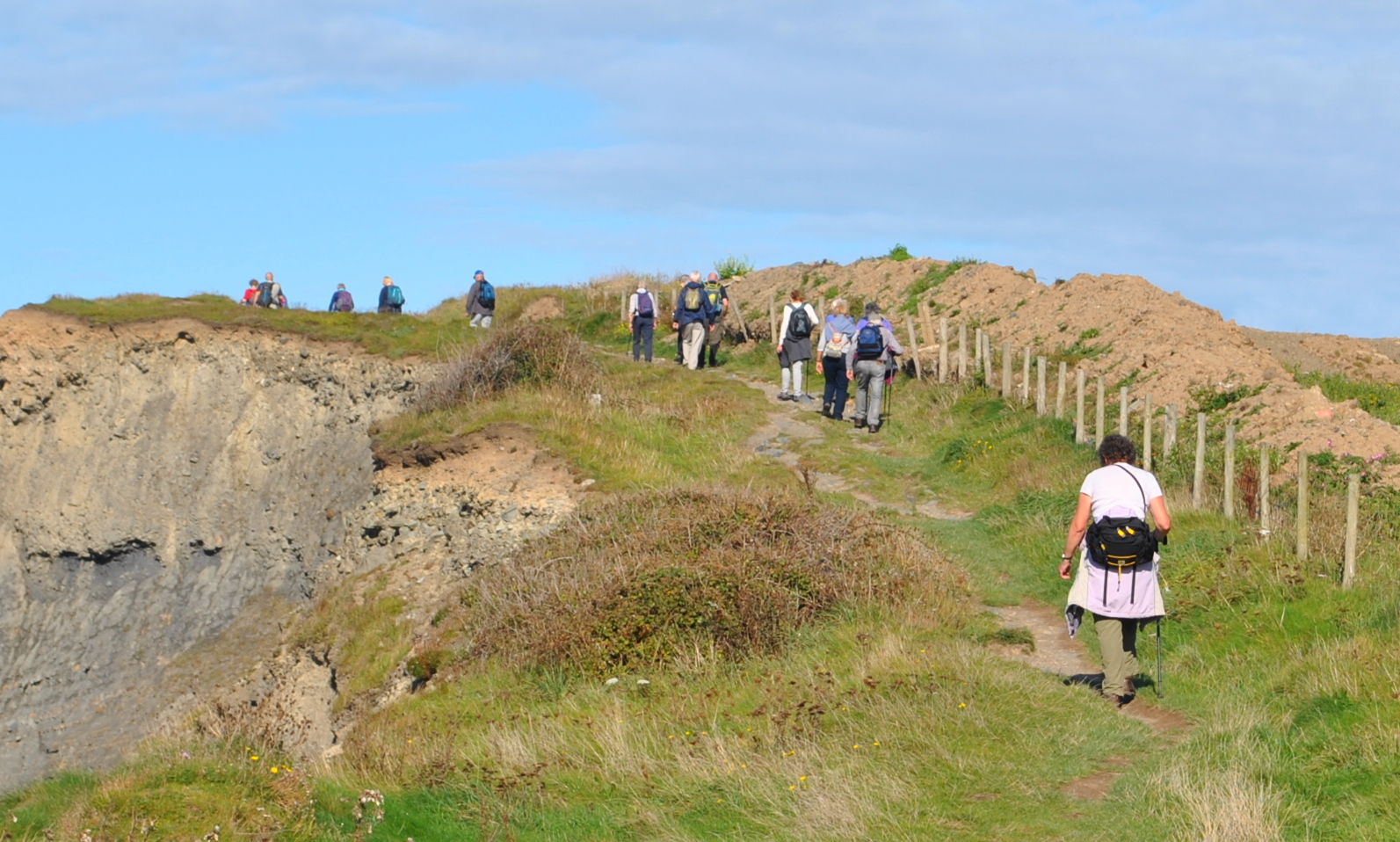
This was the group heading North from Aberystwyth along the Coastal Path:
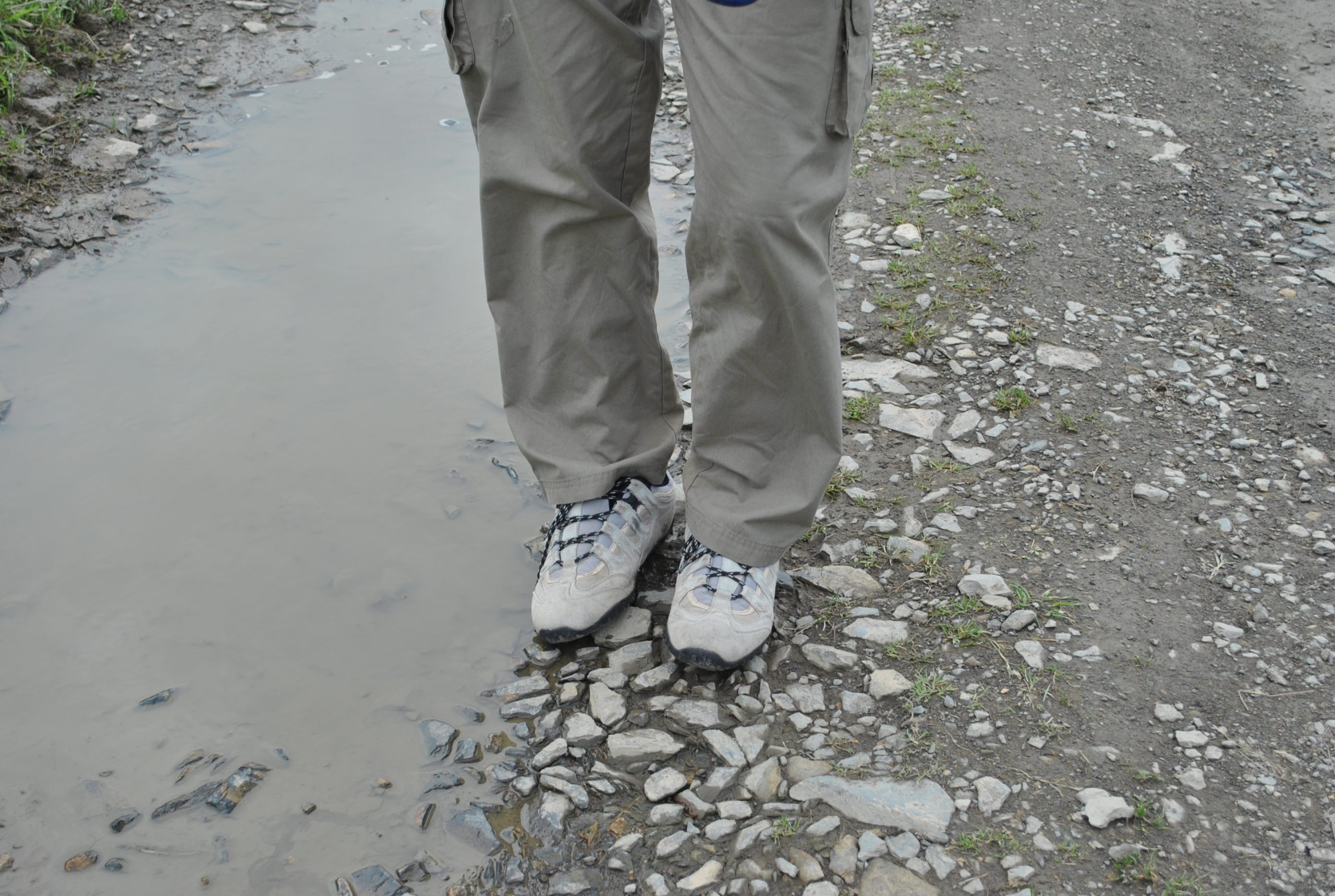
Footwear Several of the group wore One-Season walking shoes/training shoes. They gave no real ankle protection and the trainers particularly had insufficient grip in the muddy and sloping terrain we were walking on. And of course, after the first submersion in a deeper pool of water or mud the whole foot and inside of the shoe was soaked. Yuk – not a pleasant experience in the first hour of day one! One Season shoes and water/mud do not go well:
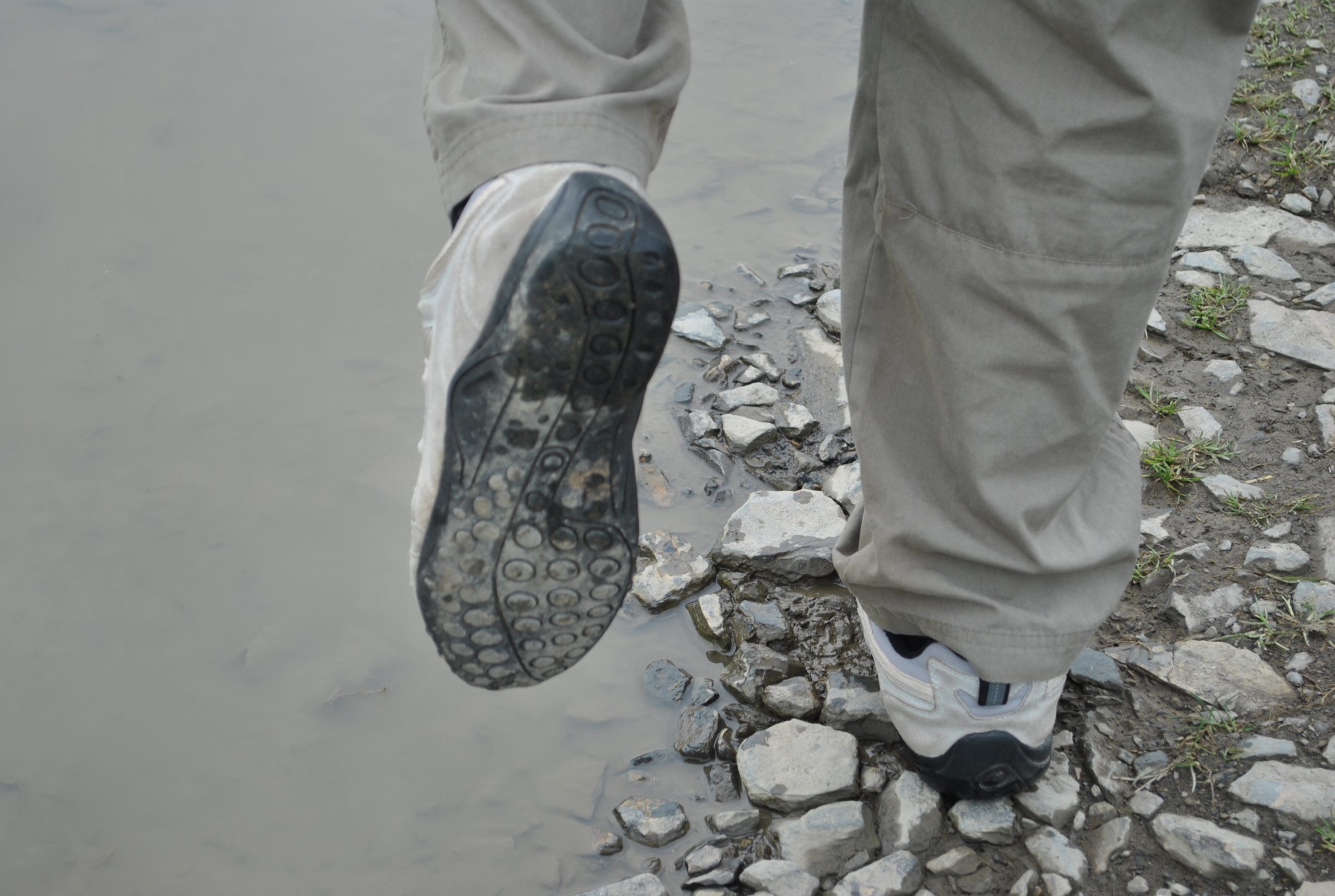
The tread on any walking footwear is really important. One of the group had a pair of leather boots but they had no grip. She walked most of the time as if she expected to slip and fall at any moment. Such a stance must have been exhausting and after a real strain on her back given her permanently defensive slightly forward stance.
Lack of tread can be dangerous:
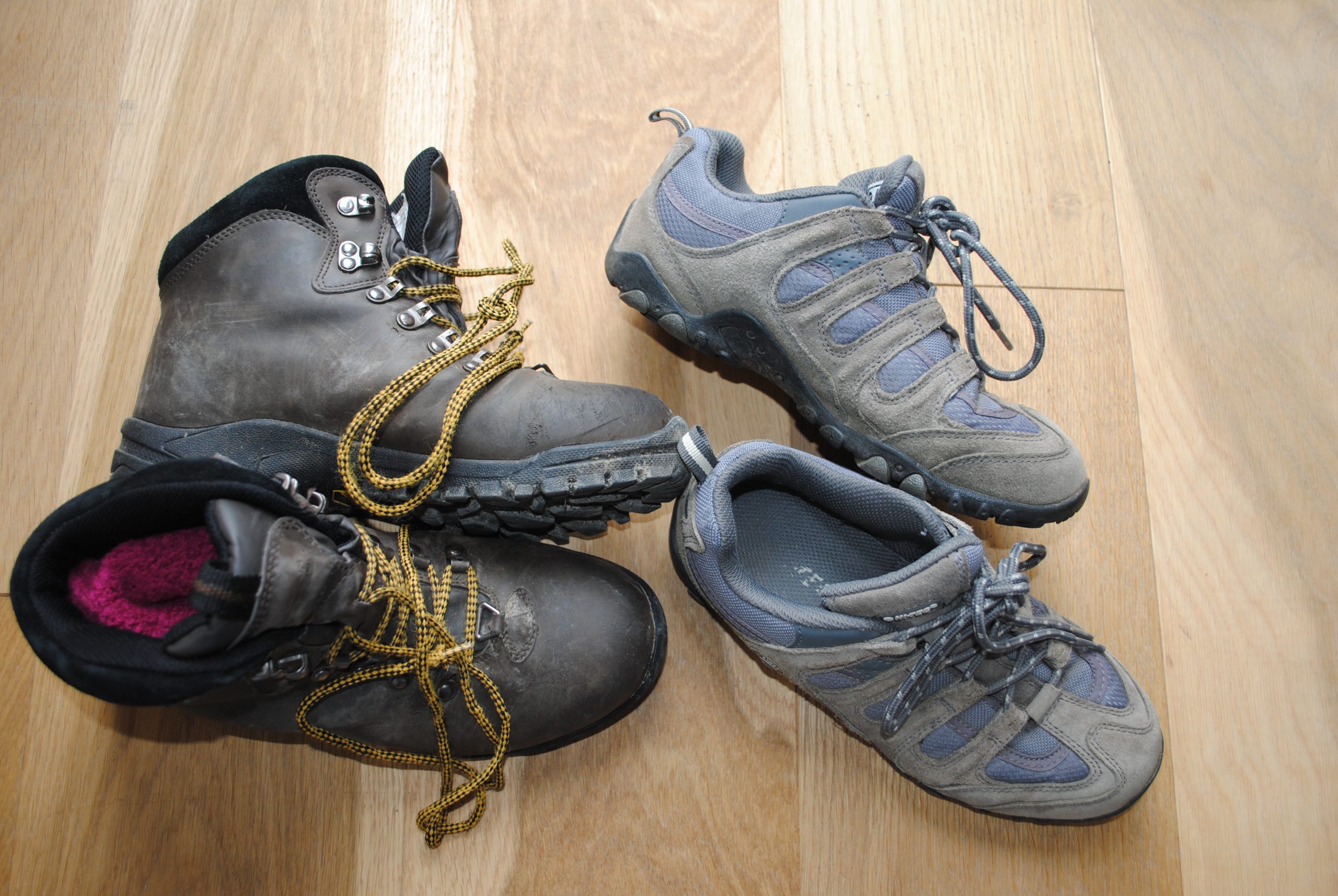
Walking boots and shoes are graded from One to Four Season. This terminology can be misleading. One-Season is a basic lightweight walking shoe with little or no ankle support: it is ideal for walking on flat, well made paths. Four-Season is very much more rigid and heavier, offering great ankle support and you can add a crampon to it. This is Everest-bound kit and probably overkill for most of us. I prefer the Three-Season boot with a leather upper. Three Season boots and One Season shoes next to each other for comparison:
It has great ankle support and gives you a good grip: and because it is leather you can look after it with regular coatings of wax weatherproofing to keep the leather supple and waterproof. Ok I accept that leather does not breath as well as a lighter fabric-upper boot but the layering system in a modern leather boot does incorporate enough breathability to keep your foot from overheating. And leather uppers give more waterproof protection than fabric uppers.
The best advice I can give you on boots is get them fitted by a trained assistant in an outdoor specialist shop unless you are confident you know what you are looking for. And wear them around the house before going outside. Most good shops will take them back as long as they have not been worn outside.
Gaiters These are a great bit of kit to protect your boot by fending off water and mud. I was pleased that several individuals in the group had them but a few did not know how to wear them. Remember to use the hook on the gaiter to catch the front of your bootlace nearest to the toe in order to hold the gaiter in place and prevent water ingress through the top and tongue of your boot.
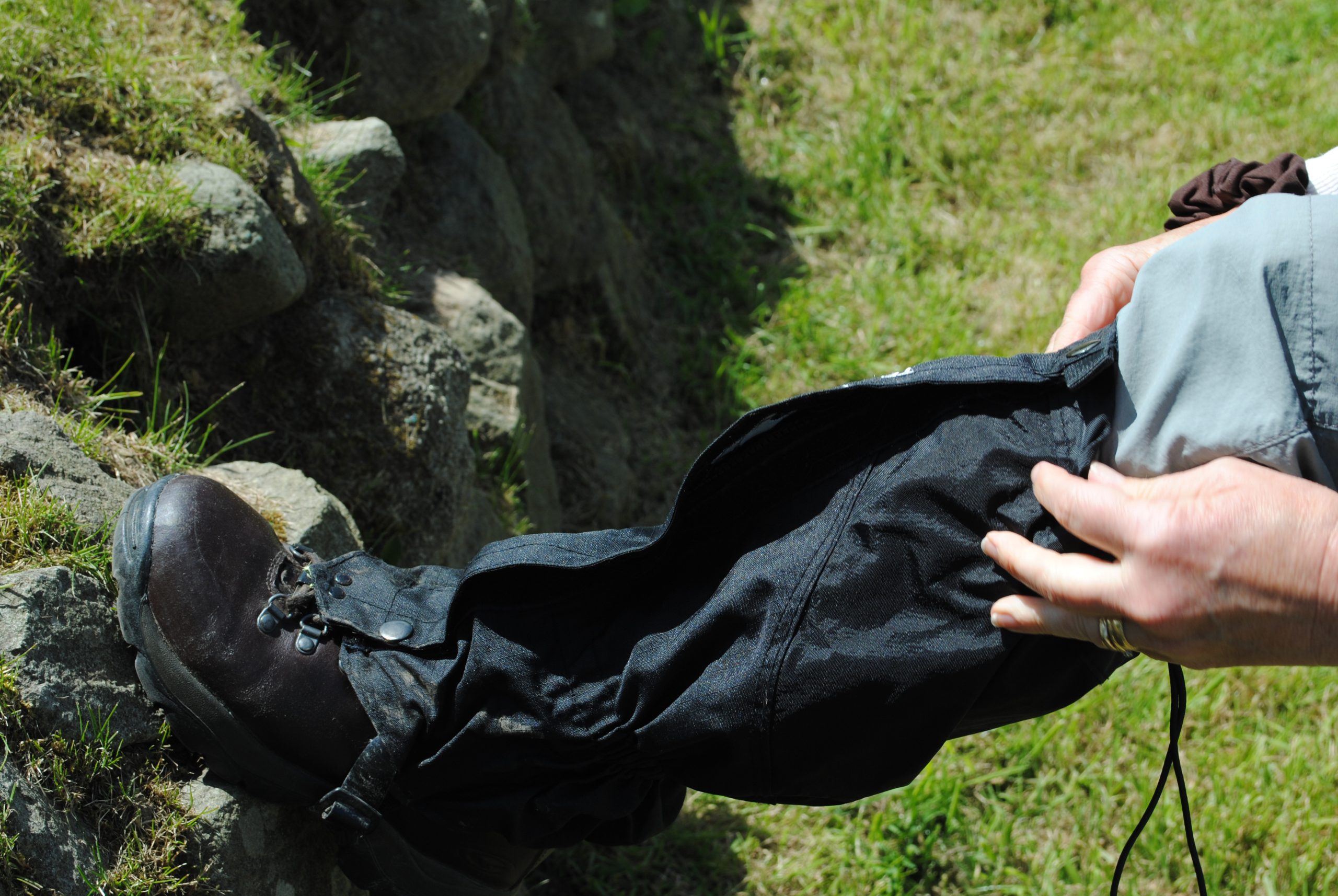
And also remember that the gaiter goes on over your trouser leg and your outer waterproof layer then goes on over the gaiter. If the gaiter goes on over your waterproof then it will channel all the water, running down your leg, into your boot!
Waterproof Jackets and Trousers The group turned out in a wide variety of quality waterproofs. One gent had a very costly Jack Woolskin jacket and Berghaus over-trousers but most came along with cheaper non-breathable, plastic shower-mac type outer layering. Now the simple truth is that unless you are sporting some very seriously priced extreme weather layers, you are probably, eventually going to get wet if you walk for any period in the mid-Wales ‘tropicalesk’ downpour we endured on our first morning’s walk around the Elan Valley! However, you really should be looking to buy a quality outer layer which will ensure that most of your body stays dry for most of the time. The real pro (i.e. you when you know the real durability of your kit) will throw in a diversionary detour to a cafe or a pub just before you reach the point where you know that your kit is about to give in and you will experience that tipping point moment – the cold trickle of rain reaching your body! My message is, go for a reputable make with a high level of waterproofing (it’s all about hydrostatic head! – look it up on the internet) and that does not need to break the bank!
The Walking Pole A few carried walking poles but even fewer used them properly. This often disregarded piece of kit is worth its weight in gold as it is your third or fourth (if you choose to walk with two poles) point of contact with the ground and in muddy conditions it can provide you with great confidence and stability.
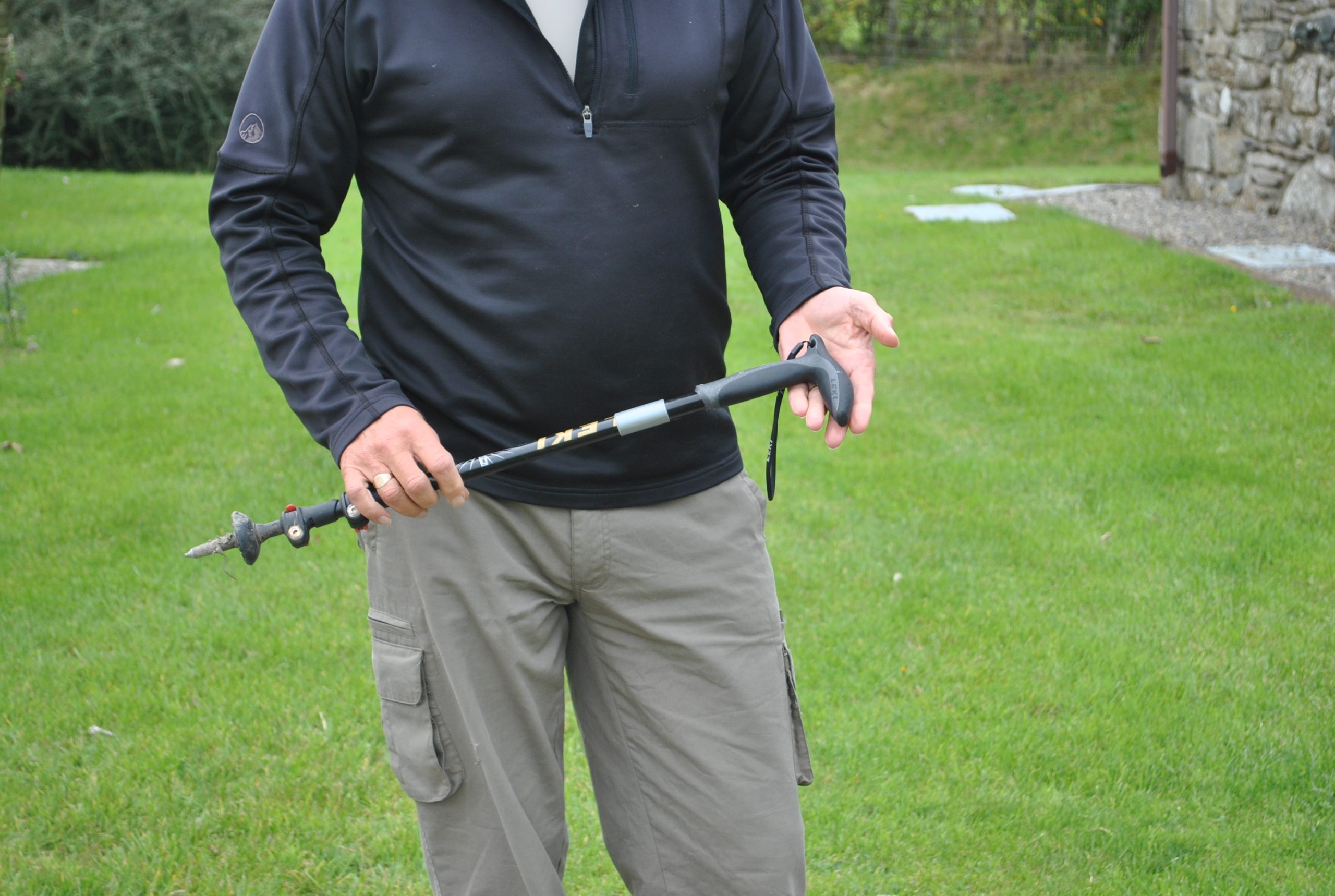
Extendable poles get my vote because they come into their own when ascending or descending steep slopes. Remember to adjust their length to provide best support to you: lengthen them on the ascent so you don’t have to lean too far forward to reach the slope below you and shorten them on the ascent so that you can plant them in front of you and you can then use them in combination with your arm muscles to push through and up the slope. This is very much the principle of using arms and poles in Nordic Walking.
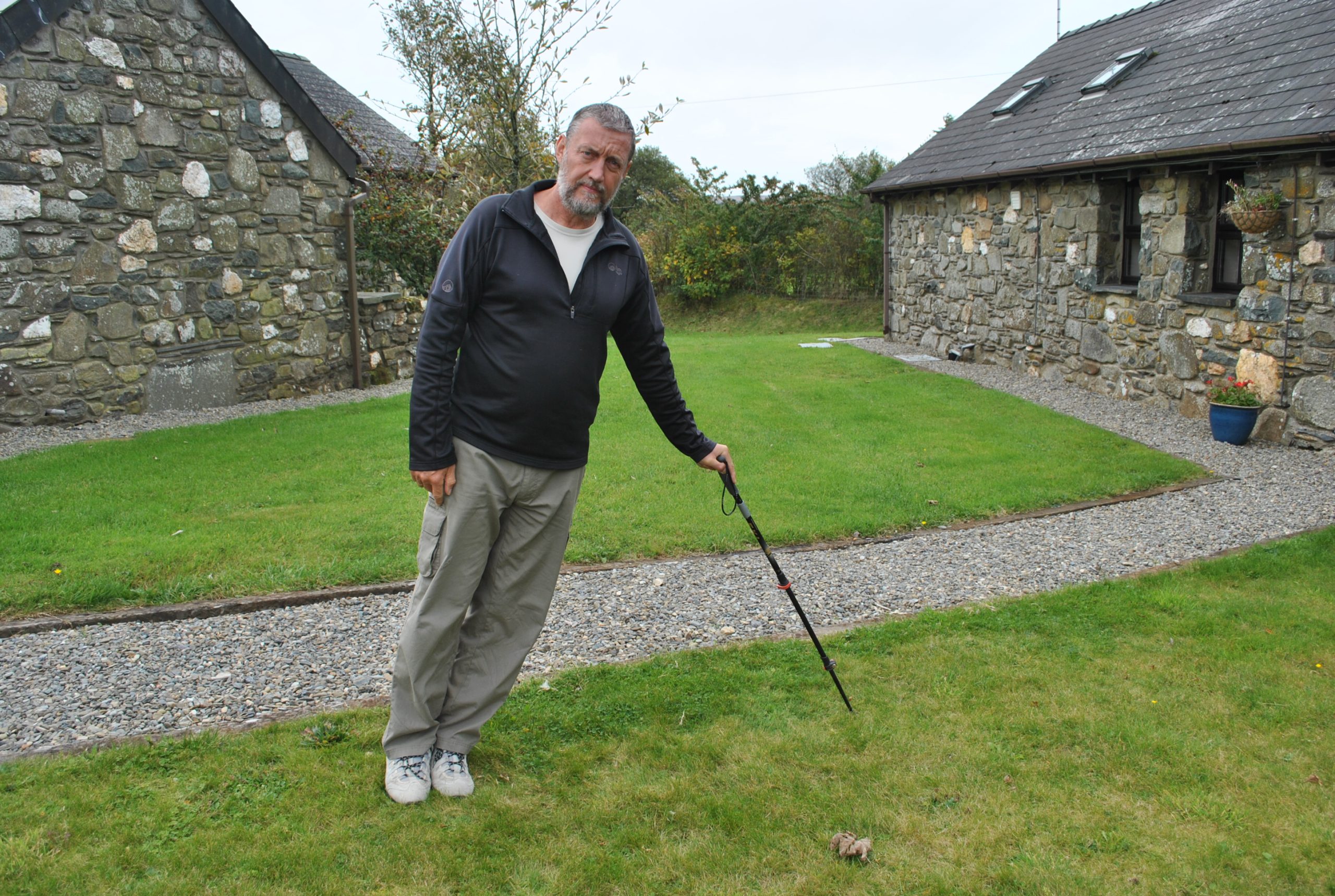
Mine has a handle on the top (see above) – a bit like a walking stick – and is very comfortable in the palm of the hand when I really push down in it. Some complain that the pole without a right angled handle, but just a rounded handle-end, dig into the palm when lent on. The handle is comfortable enough to place your weight (and trust) on it:
The Rucksack These varied in styles and colours amongst the group and a couple were actually designed for shopping in the high street not for walking. Some rucksacks were more suited to little Jonny carrying his books and lunch to school and to kick around the playground or use as a goal post: they lacked sufficient adjustment to ensure that they remained comfortable on the back during a lengthy walk.
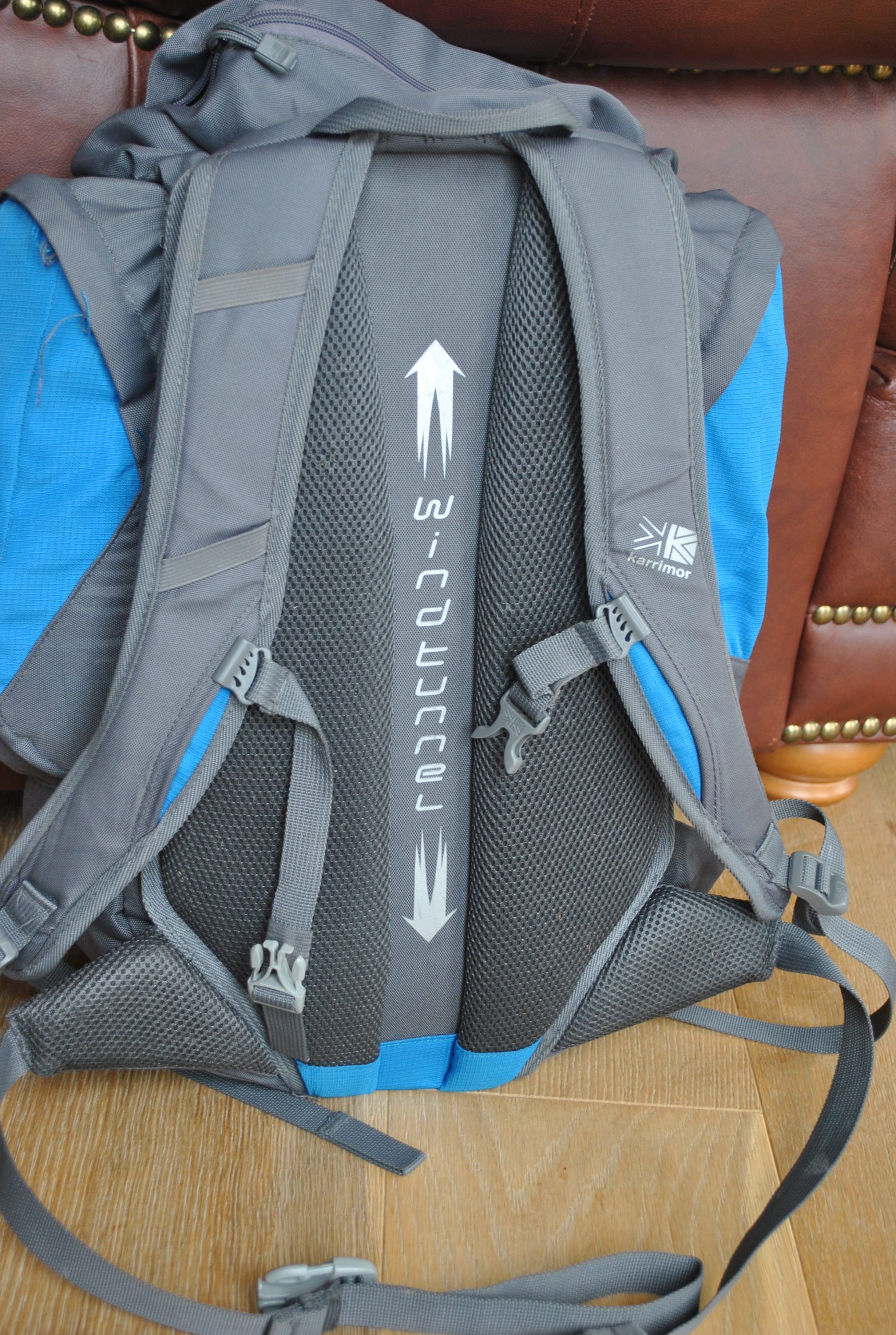
For an individual to carry his/her own kit on a day walk you can easily get away with a small rucksack of about 30-35 litres in size (see my blog What’s In Your Rucksack (1) dated 10 May 2015) but do ensure that it has: at least a waist belt and preferably a chest strap; well padded shoulder straps; and has some sort of venting system to allow air to pass between you and the main body of the rucksack. This is important in the summer to help keep your back cool but also in really heavy and persistent rain it will reduce the areas where rain is likely to pool against your outer waterproof and if that waterproof is going to give in that will be where it happens! When you buy a rucksack ask the assistant to fill it with something to simulate a typical day’s weight of kit and then get them to adjust the straps so that the weight is spread on your shoulder straps and your waist band.
My small day rucksack has chest and waist straps, a vent tunnel and padded shoulder straps:
Many larger rucksacks have adjustments to best suit the length of your back. Walk around the shop a few times and try twisting your body to the left and right to ensure the bag remains comfortable on your back (ok you may feel like a plonker but the shop assistant will know that you are actually a pro who knows what they are looking for!).
The Base Layer Now I did not go round studying the underclothing of the group but I did notice several zips going up and down and top layers going on and off at each stop. The conclusion of this general observation was that many of the group were wearing cotton layers next to the skin and that is the worst material you can wear when walking.
Cotton holds moisture and the body cools 25 times faster when wet. To understand the effect, simple put on a cotton T-shirt, pour a bucket of cold water over yourself and then go and stand in a windy spot. Notice how quickly you get cold! Cotton also fails the clammy test. Work up a sweet in a cotton T-shirt and notice how clammy you feel! Instead invest in base-layer which is usually woolen or made up of a compound synthetic material. These are cleverly designed to ‘wick’ moisture away from the body to keep you dry and the small holes thorough which the moisture is wicked also traps air which is warmed by your body heat, so you also keep warm. A base layer is in effect, a clever modern version of your granddad’s string vest! That might not be the best way to sell you the idea but it is true. Base layers keep you warm and dry and as a result they are far more comfortable than cotton.
The ubiquitous umbrella! Now I have never taken out a walking group where several (5 in this one!) produced umbrellas when it started to rain.
Not sure it is really me! 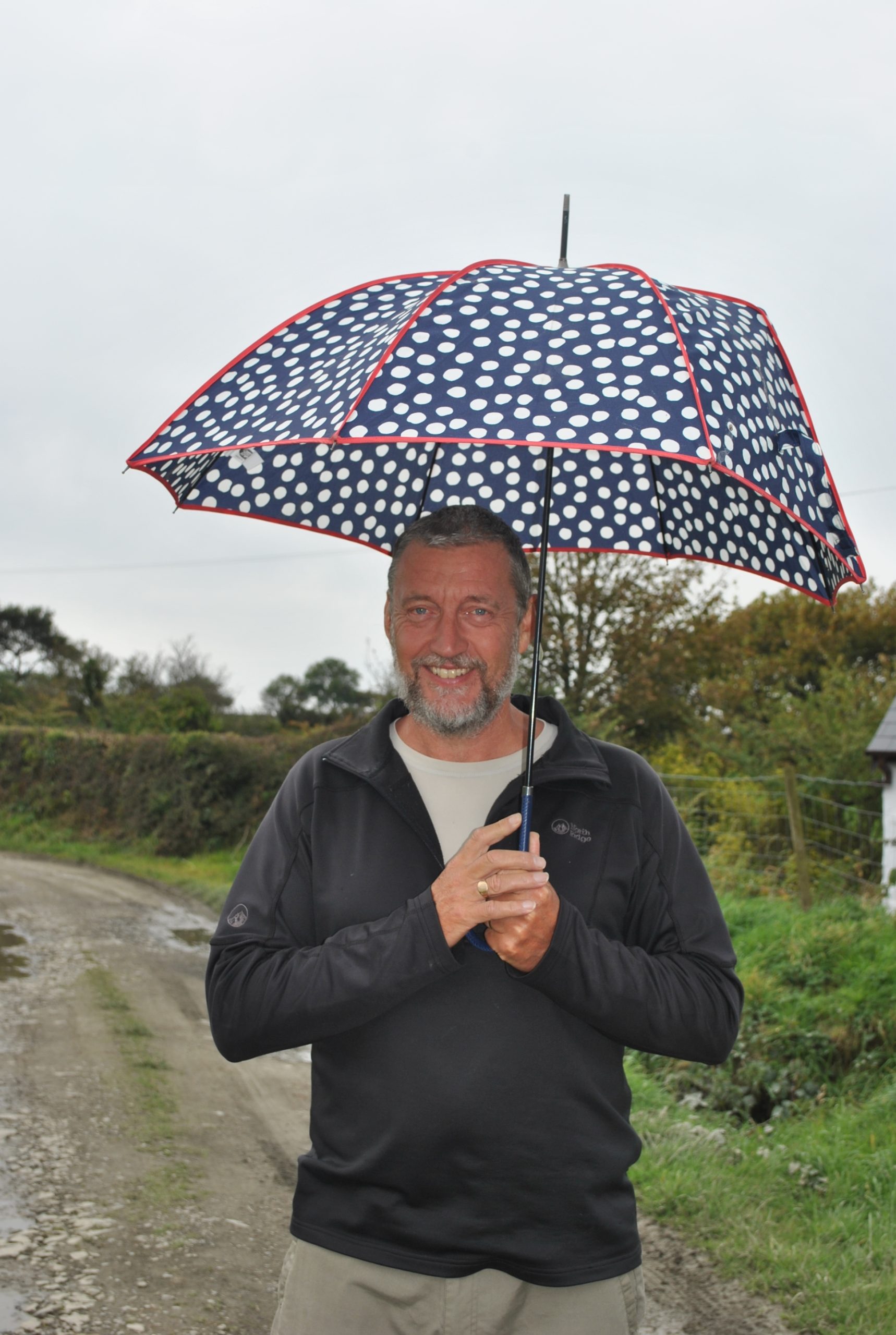
Ok, it was not windy and so the umbrellas were functional but they did seem somewhat out of place and were cumbersome, occupying a hand which could be better employed to provide balance. Instead I would suggest that when choosing a waterproof a fitted hood with a wired brim would be better option.
Costs Like any pastime you can pay as much or as little as you like on walking equipment and kit. Many of the doom-mongers will trot out the old adage that ’you only get what you pay for’ and to a degree that is true but there is still room to get good kit at a reasonable price. I would strongly suggest the following approach:
Buying the annual kit guide that is usually produced by walking magazines. These usually list the characteristics to look for when buying each piece of kit and equipment. It’s very similar to the Which Guide to buying XYZ. The kit list then reviews, prices and recommends what to go for according to your budget.
Also keep a look out for end of season sales – you can often pick up a good winter waterproof in spring.
Once you know what you want check out the internet: there are some great web-based outlets which you won’t find on the high street but which sell top brands at a real knock down price.
What is wrong with last year’s colours? Walking is not about making a fashion statement.
Take with you a friend who knows about walking when you go to buy your kit. They will ensure you do not get duped into buying Rolls Royce kit when something less would be perfectly adequate for your walking needs.
And finally, look after your kit, clear your clothing using the right re-proofing agents and clean/wax your boots. That way everything will remain perfectly functional for many years.
What My Kit Cost Me My 5-year old boots cost me £40 in a sale: my gaiters cost £15 (Ok the zip-pull broke in half but the zip still works): my top brand waterproof jacket cost £60 (ok it’s a dull grey colour but it good quality and cheap): top brand waterproof over-trousers cost my £80 (I love these and feel invincible in them!); my trusty walking pole was £20 and my latest 60 litre rucksack (a guide carries more kit than an individual) was £40. My base layer top cost £5; and I do NOT carry an umbrella!
Hope that helps: If you want more detail about my walking skills module about kit and layer management see my website www.discoverwalkingpembrokeshire.co.uk