
Have you suffered from wind over the last few days? Not the internal kind which might result from a few pints of the local brew and a kebab, but the kind generated as a result of pressure imbalance between air masses moving around the earth’s surface! While the Gwaun valley here in Pembrokeshire is extremely beautiful and peaceful, we do suffer from wind because what blows in off the Atlantic, only a couple of miles away funnels straight up the valley and past our front door.
It’s great for Carol’s washing and watching it whip around the rotary clothes drier reminds me of something from Winnie the Pooh on a Blustery Day! But for walkers there is more serious side to wind and once it passes the exhilarating levels it can become serious issue. That said, and like most aspects of walking if you know about it in advance and route plan accordingly and know what the likely impact will be on the hills, then you should be able to enjoy the experience and live to walk another day.
Understanding Wind. There are many books and u-tube videos which explain in excruciating detail what wind is and its connection with warm and cold fronts. Read into those as much or as little as you want but I believe you need to remember the following real basics. Walking Tip No 6 – ALWAYS check the weather from a reliable source as part of your route planning. I have learned to trust the BBC weather for Pembrokeshire but there are several good and many not so good other sources. AND remember that the wind speed and direction given in the forecast is usually for sea level. You will need to ‘convert’ it to the height you will be walking because the wind that blows into hills and mountains is forced to rise over them and it is squeezed between the hills and the tropopause (part of the atmosphere!) thus making it blow harder. Similarly wind blowing through a valley (like the Gwaun Valley) is funnelled and thus blows stronger straight past my front door! It’s exactly the same as water squeezed through a hose pipe comes out faster. Below are two shots of Bwlch-gwynt in the Preseli’s (pronounced ‘bulk gwint’ and meaning Windy Pass) – although it does not look steep or difficult, the clue is in the name! At 404m the wind really is squeezed over it.


Two Rules of Thumb When Planning a Walk. Now it’s always a bit dangerous to give out rules of thumb: they are not gospel but simply a guide. I picked these up on a couple of courses I did years ago. Walking Tip No 7 – Firstly, at 900m above sea level wind blows about three times stronger than at sea level. And secondly, walking in a 30 mph wind can be tricky, at 40 mph you could be blown off balance and at 60 mph it is almost impossible. My message – plan ahead!!
The Effect of Wind While Walking. Obviously walking into a wind is more tiring and the wind chill factor can be significant: and if you are also wet (you lose heat 25 times faster than if you are dry) the two in combination could very quickly lead to a serious problem.
- It is harder to communicate with your fellow walkers and easier to become separated without realising it because you will naturally tend to walk with your head down when walking into wind. Some people will relish the extra challenge and the adrenalin rush of clinging on and battling the elements (these are the ones who queue up time after time for the biggest rides at the theme parks!): others will feel far less comfortable and the communications difficulties will only serve to accelerate their declining morale.
- There is also an increased physical danger: tuck away all your straps because they really hurt if they whip you in the eye (take it from me!), debris might be flying around the hill – even bits of grass in the eye can hurt; branches on trees might be whipping around at head height; wind might be stinging on the face especially if combined with rain; and, of course the dangers of a fall or stumble near an edge of a steep slope is increased. In fact don’t go near the edge – ever!!
- Timings to complete your walk could be significantly impacted: you walk slower, you tire quicker, you need more rests. Add a good dollop of extra time to your planning. Walking Tip No 8 – far fewer problems are likely to arise through finishing a walk earlier than planned compared to finishing one much later than planned!
But Lets Not be Put Off Completely! There are, of course sensible precautions and preparation which can reduce the negative impact of wind on your day’s walking.
- If you are planning a circular walk, plan to walk into the wind earlier in the day when you are fresh. It is easier to walk with the wind at your back later in the day.
- Ensure you plan plenty of escape routes in case the wind gets worse than you expected. The hills will always be there for another day. Safety must always be your first consideration. Pride comes before a fall etc etc ……
- Use the features of the land to shelter you. For example walk below a ridgeline in the lee of the hill and only pop your head up to enjoy the view when it is worth it.
- Can a detour in the lee of a feature make the difference between going for the walk and not? Is it really essential that you scale the hill and walk through that funnelling pass? Alternatively go up: have a quick look/phot and then come back down and walk in the lee. Be sensible, know your limits and plan a route that you can enjoy. Do not plan for the most exposure just to appear hard!
- Plan and look for frequent shelter to enjoy breaks. A relaxed brew and a bite to eat in shelter while watching the wind hurtle past and missing you is great.
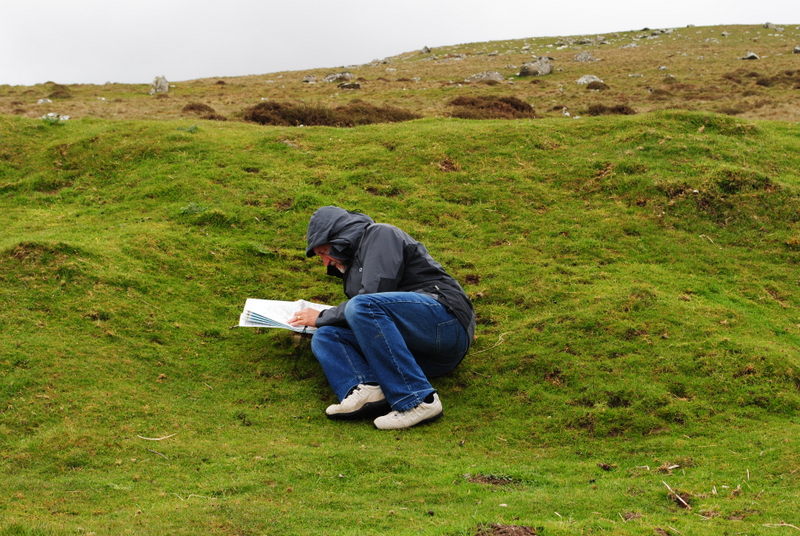
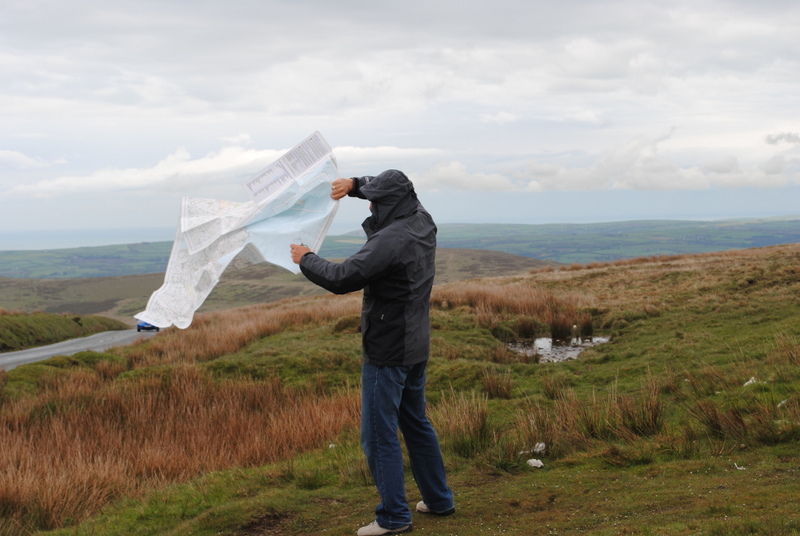
- Do your map checks and set your compass for the next leg (if that is necessary) while in a sheltered spot (see left below) and not when you are standing in a full force of the wind. If you need to refold your map – you shouldn’t really need to if you fold it correctly in the first place – do that in the lee of the hill. A fully opened OS Map in a 30mph wind is a great sail!(see right below)
- Wear goggles (ski goggles are fine) for extra protection and to reduce eye watering. You might think you look a bit naff (and I admit I prefer my super-cool sunglasses) but you are actually being very sensible and every walker who knows a bit about walking will appreciate that you are the sensible one! If it really bothers you, whip them off if someone approaches or push them back onto your forehead to look cool.
I have only skimmed the surface here but we talk a lot more about wind on one of our walking modules. But the bottom line is the hills will always be there so why risk it and if you do walk in the wind use the features to advantage.