
Stuck for time and cannot get out into the hills? No matter you can get some serious practice in without having to go very far. Walking Tip No 10: Try your nearest woods – they are a great playground for you to practice several different walking skills.
I should say at the outset that woods make me shudder. Did you ever watch the opening scene of the film Gladiator where the Roman legion is in the North German forest (yes, I know it was actually Pinewood Studios!) looking to finally wipe out the last of the local tribes? I love all that macho, alpha-male sort of stuff….. ‘On my signal, unleash hell!!’ demands a very Australian sounding Roman general (Russell Crowe). Awesome!
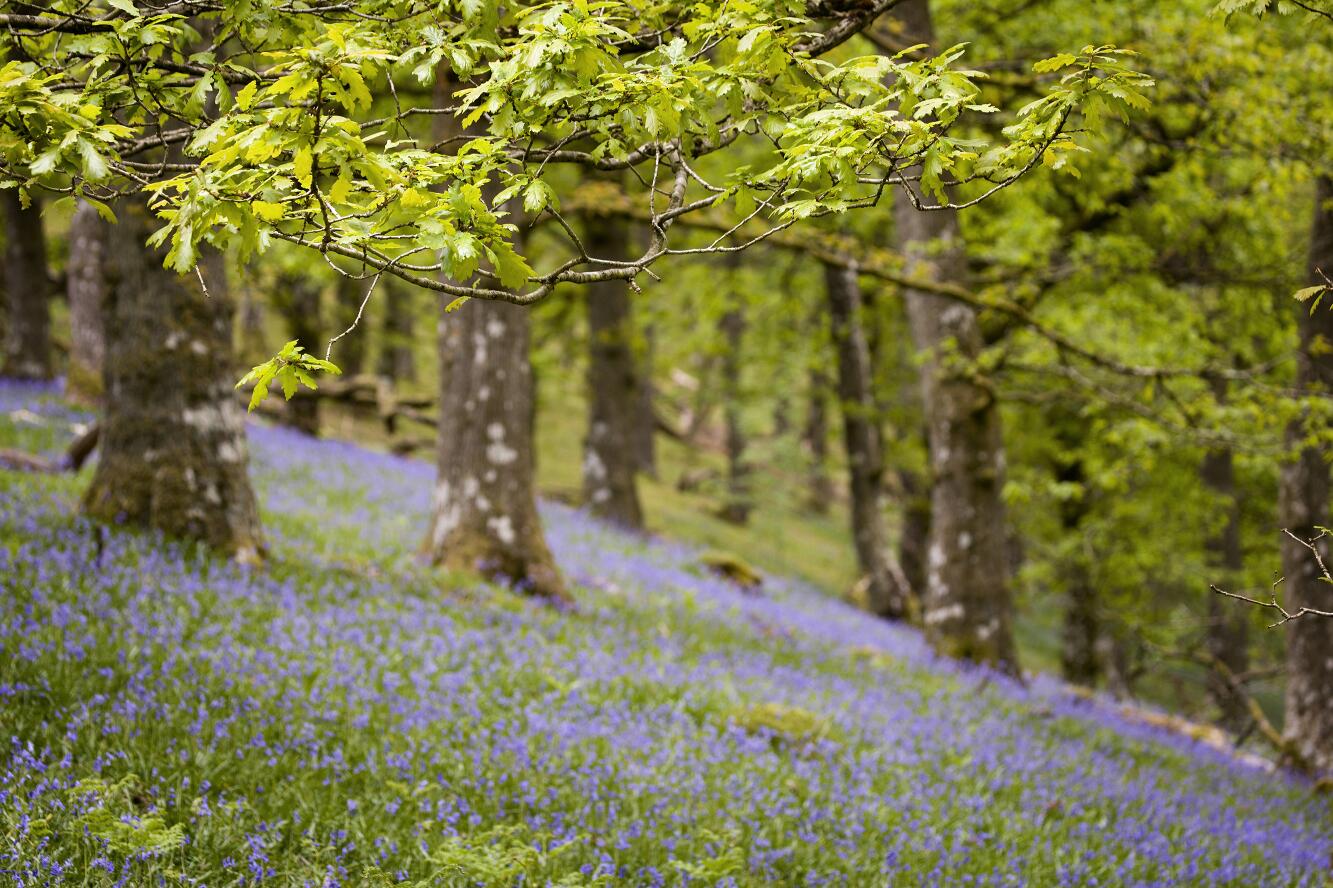 Woods can be beautiful but they also present some really good challenges.
However, that film mentally scared me because now, whenever I am in any woods, I genuinely worry about suddenly coming face to face with a lost tribe all of whom look something akin to the wild Goths or Franks or whoever they were in the third century AD. I also find myself looking over my shoulder a lot in case someone is tracking me! I am seriously afflicted! I have never told Carol because I didn’t want her to worry (actually I didn’t want her to laugh!) but when my step-daughter, Louise, recently asked me why I kept looking back I decided to confess! And of course she laughed! And I felt stupid. But I still kept a close look out … just in case (and I think I saw her have the odd look around too!!). Needless to say she couldn’t wait to tell Carol, who did not comment but just gave one of those looks – that’s worse than laughing on her scale of derision! It’s never been mentioned since!
So why was I in the woods (it was Pengelli Woods between Newport and Cardigan) in the first place? Well, about a month ago Carol and I were in there enjoying the early spring flowers (see above photo) and we thought it would be good to go back there to see what it was like now. From the flower perspective it was quite disappointing but we enjoyed the 4.2km walk and it served to remind me what a great walking skills training venue woods can be – and hence the Walking Tip above – you don’t have to get right out there in the hills to get a great day’s walking skills practice under your belt. Just get down to your local woods. Here is how and why:
How are Woods Good Places for Walking Skills Training?
Simple. Because in the woods you cannot see very far in any direction and so judging distance becomes more difficult because there is no single distant reference point to focus on or measure your progress against. Also because you are twisting and turning you soon lose your orientation. But, if you keep your wits about you and apply some of your walking skills techniques (map orientation; pacing; timing; overshoot marks; taking bearings; and the use of tick off lists over short legs), you should be able to chart your progress and remain confident that you know where you are on the track at all times – even in the most dense woodland.
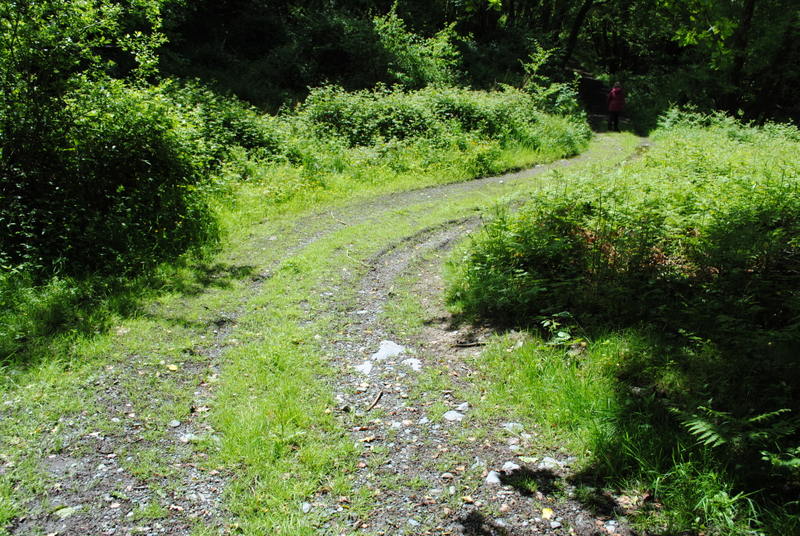
Twists and turns might be an obvious clue on the map (below left) but they can also soon disorientate you.
Why Practice all These Techniques?
That is also simple to answer. Even if there is only one very clear path and it takes you in one big loop back to the car (the sort of path on which your youngest child looks at you with scorn and declares no one, not even you dad, can get lost on this path(!)) presents an opportunity to practice the very same techniques which you would need to use in the hills and in poor visibility and if navigating at night. And on those occasions you might well wish that you had taken advantage of the local opportunities to practice a bit more – after all, practice makes perfect.
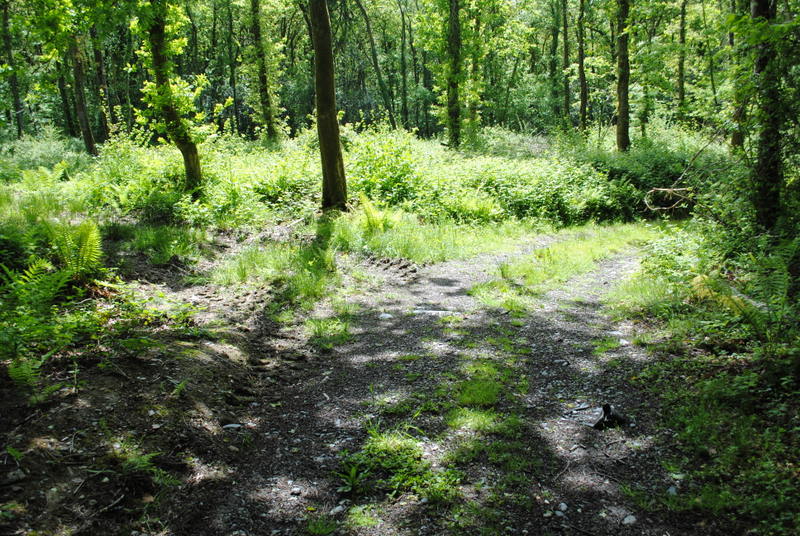
The big clear path bending to the left (in the photo below) was NOT the one we wanted. We needed to follow the easily-missed offshoot to the right.
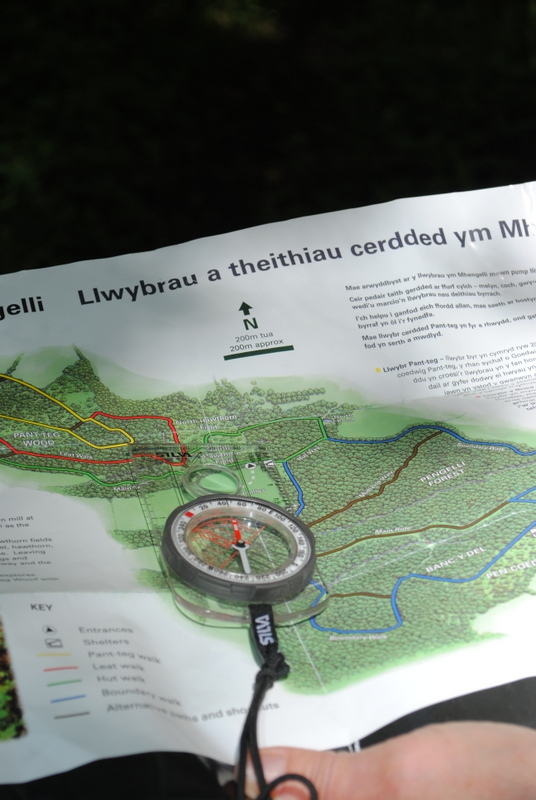
As well as practicing at any opportunity I still get great satisfaction from correctly predicting what I am going to see around the next bend and then, there it is! And I like being able to show whoever I am with exactly where we are, how far we have come and how far we have to go. And those are seriously important pieces of information. In the picture below I have used the compass to help me orientate the local map so that it is aligned to what I see around me.
Walking Tip No 11: By always knowing where you are on your path, you will know which is the shortest way off the hill to safety (or in this case back to the car) – this is your ‘escape route’. A well planned route will have several escape points at different points along it. A change of weather, someone does not feel well, you just realised you left the eggs boiling on the cooker, it’s getting dark, or, in my case I know the fastest way out if/when I meet that tribe of angry Goths! – are all reasons why you should plan in escape routes. By knowing where you are on the path and not just which path you are on, you will know your escape route should you need to use it.
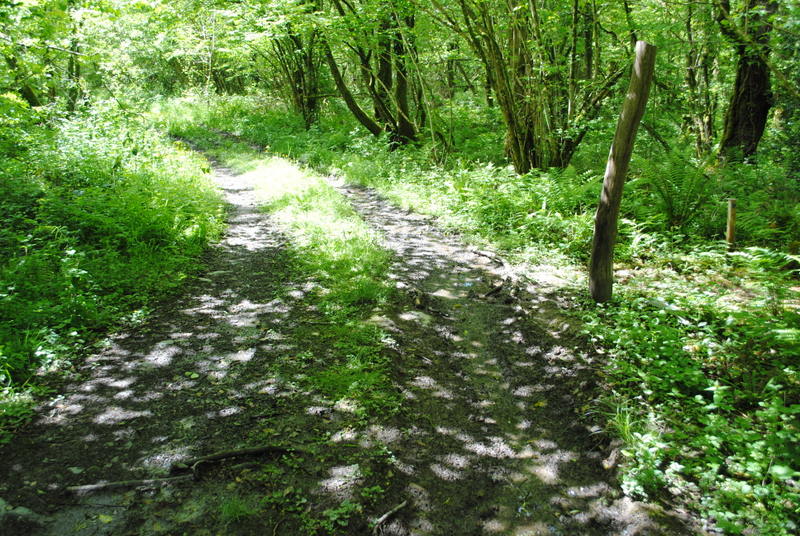
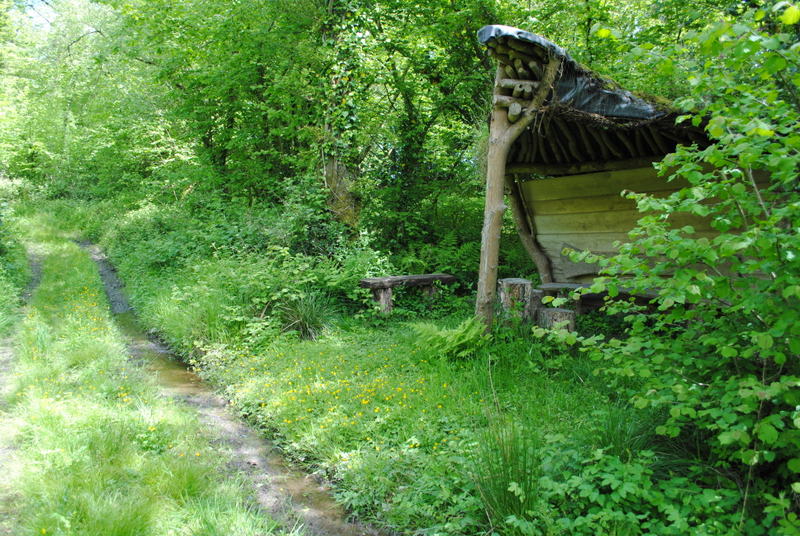
Let me give you a real example from my walk in Pengelli woods where I was able to use a combination of walking skills to calculate, with confidence, where we were when we came to the resting place in the picture below. I know that we were half way along a 300m stretch of straight path which was bearing approximately North-South. We had reached it 15 minutes after passing a pond so I know we had travelled about 500m beyond the pond (we saunter along at about 2km per hour). We were still in heavy woods so I know we had not reached the forest edge where there was a distinct meeting of several paths and which was loosely speaking my overshoot mark. Through a combination of skills – timing, taking a bearing, orientating the map, and selecting an overshoot (the forest edge) – I felt confident that I had enough information to know where we were on the local map (see picture above) and also, vitally, I also knew that we were well over half way round the route. So going on would be the quickest way to safety (the car) – i.e. I knew our escape route to the car if we needed it.
Just to be clear, even if the local map is not drawn to the same standards of accuracy as an Ordnance Survey map, the combination of walking skills techniques will give you enough confidence to estimate where you are.
So What Did I Get out of My Walk in the Woods?
- I now know that if there are wild tribes in Pengelli Woods they keep well hidden!
- I was reminded that the most obvious path might not be the one you want to take!
- An ‘obvious’ path which is not marked on the map might not be a path at all and might simply peter out after a short distance – like the one shown on the left of the picture below.
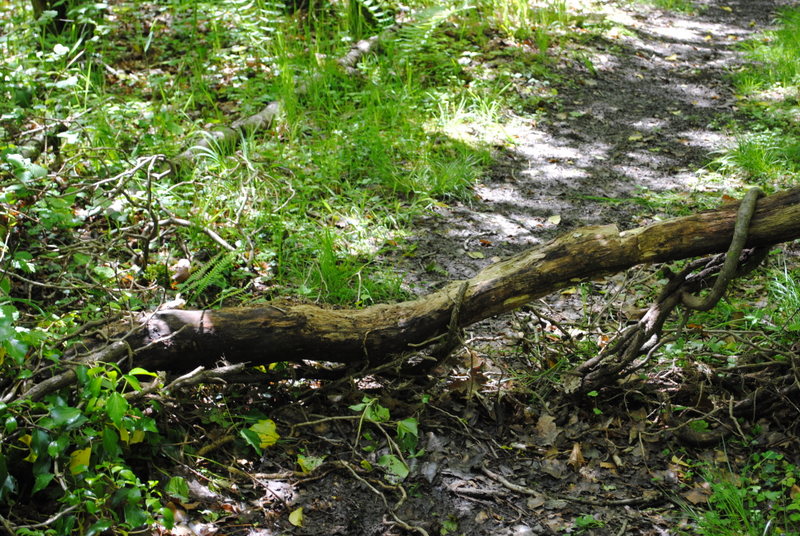
- I learned to look where I am going – tripping hazards are only obvious if you see them! (see below)
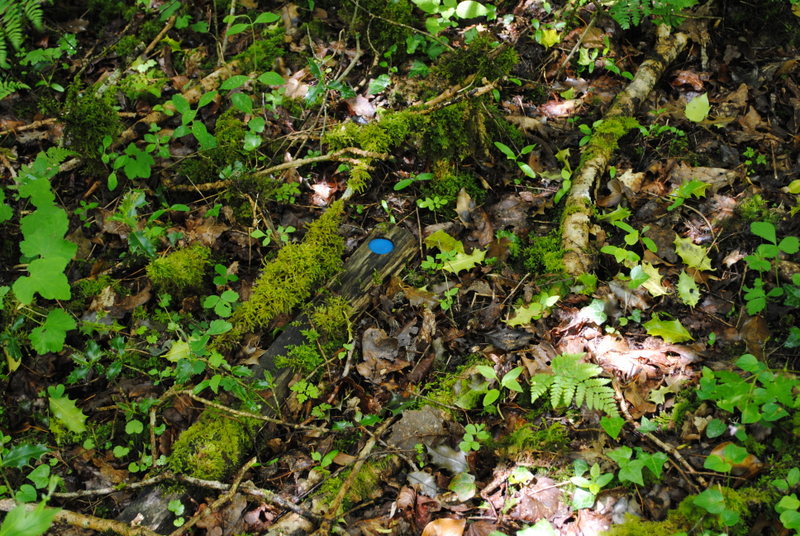
- And I was reminded that while path markers are great, they can fall down. Do not assume you will see them. (see below)
- A proved that a combination of mutually supporting walking skills will provide you with enough confidence to estimate where you and this will help to overcome the inaccuracies of any local map.
- And I learned that even local maps possess many useful clues – as an obvious resting point, a wide stream, a sharp bend, a long curving bend, an obvious clearing or the edge of a forest. Make use of the clues presented to you.
At Discover Walking Pembrokeshire we can help you perfect all of the techniques mentioned above and many more. See our website for details or give me a call and we can chat.
As a parting word I would like to point out that Pengelli Woods is the largest remaining ancient oak woodland in Wales – it dates back to the ice-age! So it was in existence when Russell Crowe was tribe-bashing in the name of the Roman Empire! I think I was right to look over my shoulder!